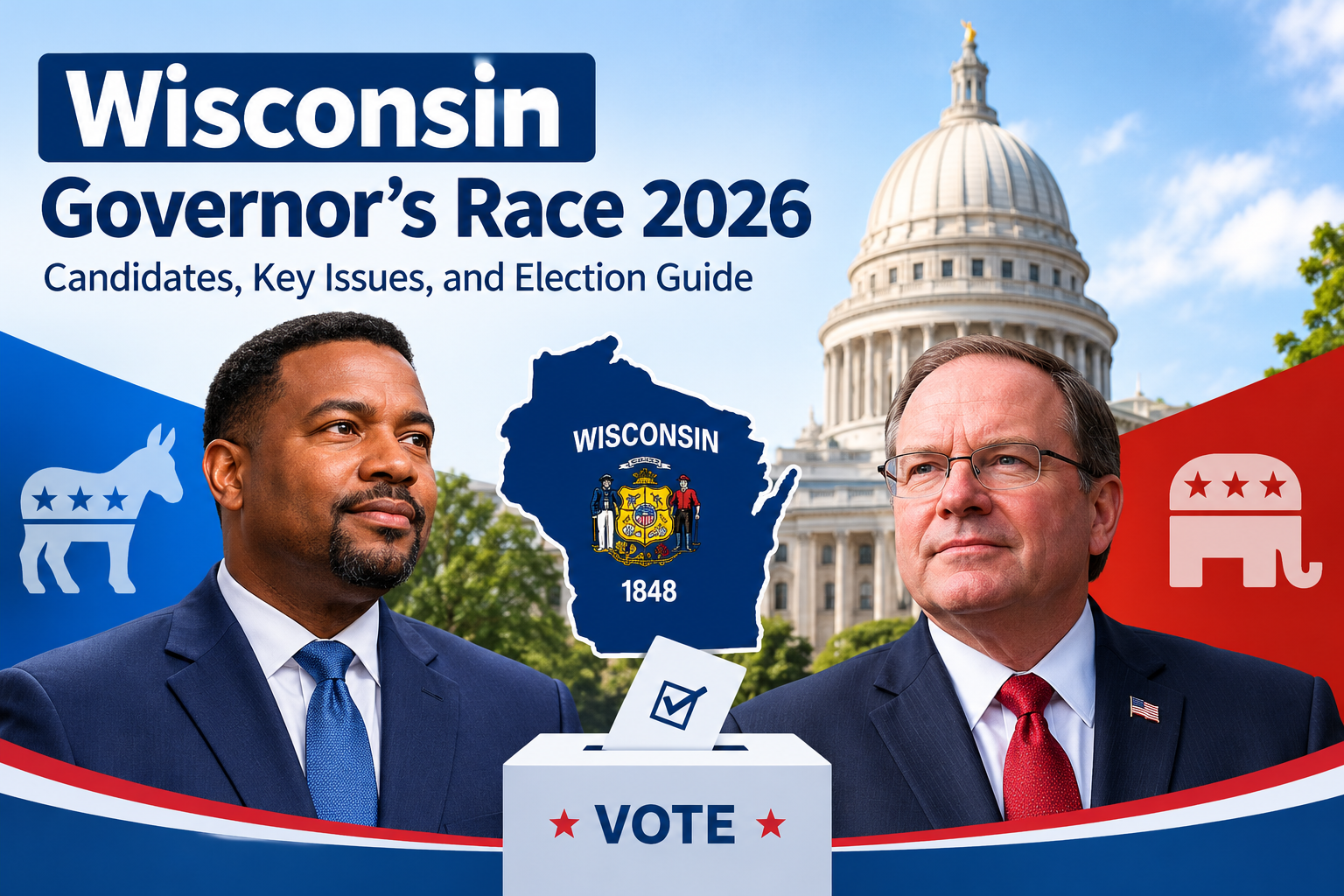
The Wisconsin governor’s race is one of the important political contests in the United States in 2026. Voters will choose the state’s next governor on November 3, 2026, in an election focused on the cost of living, taxes, public safety, education, and the future direction of Wisconsin.
The race is especially significant because current Democratic Governor Tony Evers is not seeking a third term. This creates an open-seat contest between Democratic candidate David Crowley and Republican candidate Tom Tiffany.
In this guide, we explain the main candidates, their priorities, the issues shaping the campaign, and what voters should know before Election Day.
What Is the Wisconsin Governor’s Race?
The Wisconsin governor’s race is the election to choose the next governor of Wisconsin, a state in the Midwestern United States.
The governor serves as the state’s chief executive, oversees state agencies, signs or vetoes legislation, and helps shape public policies affecting residents, businesses, schools, and local communities.
The 2026 election is scheduled for November 3, 2026. Wisconsin’s governor serves a four-year term.
Who Are the Candidates in the Wisconsin Governor’s Race?
Two major-party candidates are competing in the November general election.
1. David Crowley — Democratic Candidate
David Crowley is the Milwaukee County executive and the Democratic nominee for governor.
His campaign emphasizes addressing the cost of living, expanding opportunities for families, strengthening public services, and investing in communities.
Crowley’s policy priorities include programs intended to improve access to early childhood education and healthcare. He also faces questions about how his proposals would be funded and how they would affect taxpayers.
Crowley is seeking to become Wisconsin’s first Black governor.
2. Tom Tiffany — Republican Candidate
Tom Tiffany is a Republican member of the U.S. House of Representatives representing Wisconsin’s Seventh Congressional District.
His campaign focuses on affordability, reducing taxes, improving public safety, and limiting regulations that he argues increase costs for households and businesses.
Tiffany has proposed changes involving property taxes, housing costs, utility regulation, and government spending. His campaign also emphasizes immigration enforcement and law enforcement.
The election gives voters a choice between two candidates offering different approaches to the state’s economic and social challenges.
Key Issues in the Wisconsin Governor’s Race
Several major issues are shaping the Wisconsin governor’s race in 2026.
1. Cost of Living and Inflation
Affordability is a central concern for Wisconsin voters. Rising costs for groceries, fuel, housing, utilities, and other necessities have placed pressure on many households.
Crowley generally favors using public programs and investments to address household expenses. Tiffany emphasizes tax reductions, deregulation, and efforts to reduce government costs.
Voters will need to consider how each candidate’s proposals could affect their household budgets.
2. Property Taxes
Property taxes are another important campaign issue, particularly for homeowners and people planning to purchase a home.
Tiffany has made reducing property taxes a major part of his platform. Crowley has emphasized affordability and public investment, raising questions about how state and local services should be funded.
The governor cannot determine every local tax bill independently. State legislation, local government budgets, and school funding policies also influence property taxes.
3. Healthcare
Healthcare affordability is an important issue for families, older adults, and people who purchase their own insurance.
Crowley supports expanding access to healthcare and has discussed policies involving BadgerCare, Wisconsin’s public healthcare program.
Tiffany has emphasized healthcare price transparency and reducing costs through changes to regulations.
The final impact of either approach would depend on the policies adopted and the funding available.
4. Education and Schools
Education is a major responsibility for state government.
The next governor will influence education funding, school policy, and the administration’s relationship with local school districts.
Crowley’s priorities include expanding access to early childhood education. Tiffany has emphasized affordability and accountability in government spending.
Parents, teachers, students, and school administrators will be watching how the candidates address school funding and educational opportunities.
5. Public Safety and Immigration
Public safety and immigration have also become important campaign topics.
Tiffany has emphasized support for law enforcement and stronger immigration enforcement. Crowley has faced Republican criticism over public safety, while his campaign promotes its own approach to community needs and government services.
Voters may consider crime prevention, police resources, emergency services, and the responsibilities of state and federal authorities when comparing the candidates.
6. Jobs and Economic Growth
Wisconsin’s economy includes manufacturing, agriculture, healthcare, tourism, and small businesses.
The next governor will face decisions about workforce development, infrastructure, business regulation, and attracting investment.
Both candidates say they want Wisconsin to remain competitive and create opportunities for residents. However, they differ in their preferred approaches to taxes, regulation, and public spending.
Why Is the 2026 Wisconsin Governor’s Race Important?
The election matters because the governor has considerable influence over state policy.
The governor can approve or veto legislation, propose budgets, appoint leaders of state agencies, and work with the state legislature on important issues.
Wisconsin’s legislature has been controlled by Republicans for much of the period since 2011. The relationship between the governor and legislature can therefore determine how easily major policy proposals become law.
The outcome could affect future debates about taxes, education, healthcare, abortion policy, paid family leave, and other issues.
The election may also attract national attention because Wisconsin is a competitive state in presidential and congressional elections.
Wisconsin Governor’s Race Polls and Latest Updates
The contest has been competitive, according to recent polling.
A Marquette University Law School poll released on September 30, 2026, found that among likely voters, David Crowley had 49% support and Tom Tiffany had 46%. The difference was within the poll’s margin of error, meaning the results did not establish a clear leader.
Polling represents voter preferences at a particular time. It does not determine the election result, and opinions can change before Election Day.
For the latest campaign developments, voters should consult reliable local reporting and updated polling information.
When Is Election Day in Wisconsin?
The general election for governor is scheduled for Tuesday, November 3, 2026.
Wisconsin voters should check their registration status, polling location, absentee voting options, and official election deadlines before voting.
The Wisconsin Elections Commission provides official election information through its website:
Eligible voters can also find voting information through the state’s official MyVote website:
How to Follow the Wisconsin Governor’s Race
To stay informed before Election Day, consider these steps:
- Read the candidates’ official policy proposals.
- Compare their positions on taxes, healthcare, education, and public safety.
- Follow reputable Wisconsin news organizations for campaign updates.
- Review polling methods and margins of error rather than relying on a single headline.
- Confirm voting requirements and deadlines through official state election resources.
Using multiple reliable sources can help voters distinguish campaign claims from independently verified information.
Frequently Asked Questions
Who is running in the Wisconsin governor’s race in 2026?
The major-party nominees are Democrat David Crowley and Republican Tom Tiffany.
When is the Wisconsin governor election?
The general election is scheduled for November 3, 2026.
Why is Tony Evers not running?
Governor Tony Evers announced that he would not seek a third term, leaving the governor’s office open for a new candidate.
What are the biggest issues in the Wisconsin governor’s race?
Major issues include inflation, the cost of living, property taxes, healthcare, education, public safety, immigration, and economic growth.
Who is leading in the Wisconsin governor’s race polls?
A September 30 Marquette University Law School poll showed Crowley at 49% and Tiffany at 46% among likely voters. The race remained close, and polling results can change.
Where can I find official Wisconsin voting information?
Visit the Wisconsin Elections Commission at https://elections.wi.gov/ or the official MyVote website at https://myvote.wi.gov/.
Conclusion
The Wisconsin governor’s race in 2026 is an important election that could shape the state’s economic priorities, public services, and political direction for the next four years.https://qalinsoom.com/best-affiliate-programs-for-beginners/
David Crowley and Tom Tiffany offer different approaches to affordability, taxes, healthcare, education, and public safety. Understanding their proposals and checking reliable election information can help voters make informed decisions.
As Election Day approaches, voters should follow verified campaign updates, compare policy proposals carefully, and use official state resources to prepare to vote.